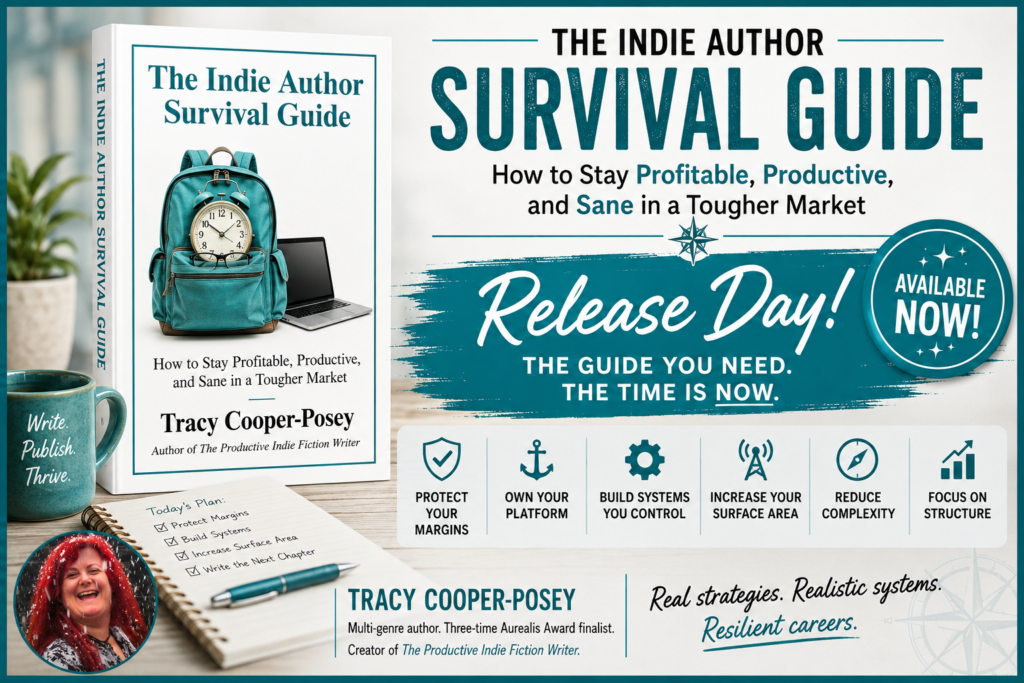
Today, The Indie Author Survival Guide is live and available for sale everywhere.
This book has been an odd one to write.
Not because the writing itself was difficult. Most of the chapters began life as posts on The Productive Indie Fiction Writer. Some of them are years old. Others were written only recently. But all of them were written in response to the same question:
What the hell happened to indie publishing?
When I wrote The Productive Indie Fiction Writer in 2023, the focus was productivity. How to write more. How to build sustainable systems. How to create enough output to support a professional career. Those things still matter. But since then, the ground has shifted.
A lot.
The indie publishing landscape of 2026 is not the indie publishing landscape of 2023, and it certainly isn’t the landscape I entered in 2011. The industry has matured. The easy growth years are behind us.
Platforms have become less reliable. Discoverability is harder. Costs have crept upward. AI has arrived. Readers have more choices than ever before. Authors are increasingly defining themselves by camps and ecosystems—wide, KU, anti-AI, Kickstarter-first, direct-sales focused, and everything in between.
It’s a tougher environment. Not impossible. Just different. And different requires adaptation. That’s what this book is really about. Not tactics. Not hacks. Not chasing the latest shiny thing.
Instead, I found myself coming back to a handful of ideas over and over again:
- Protect your margins.
- Own your platform.
- Build systems you control.
- Increase your surface area deliberately.
- Reduce unnecessary complexity.
- Focus on structure instead of spikes.
In other words, stop relying on luck and start building resilience.
The funny thing is that I didn’t realize I was writing this book until I was halfway through assembling it. Once I began gathering the posts together, a pattern emerged. Every article seemed to point toward the same conclusion: The authors most likely to survive the next decade won’t necessarily be the fastest-growing or the most visible.
They’ll be the ones who built durable businesses. The ones who can absorb shocks. The ones who aren’t dependent upon a single retailer, platform, algorithm, trend, or income stream. The ones who can adapt.
So that’s what The Indie Author Survival Guide became. Part diagnosis. Part field manual. Part reassurance that you’re not imagining things when you feel like publishing has become harder.
Because it has.
But harder doesn’t mean hopeless. It just means we need a better map.
If you’ve been reading PIFW for a while, many of the ideas will be familiar. If you’re new here, then this book may save you several years of learning things the hard way.
Either way, I hope it helps.
And now that the book is finished and out in the world, I’m going to do what every author does after a launch. I’m going to stop talking about writing. And go write.
Now Available.

The Anti-Ensh*ttification Field Manual for Indie Authors:
Because the platforms will decay…but your career doesn’t have to go down with them.
Now Available.
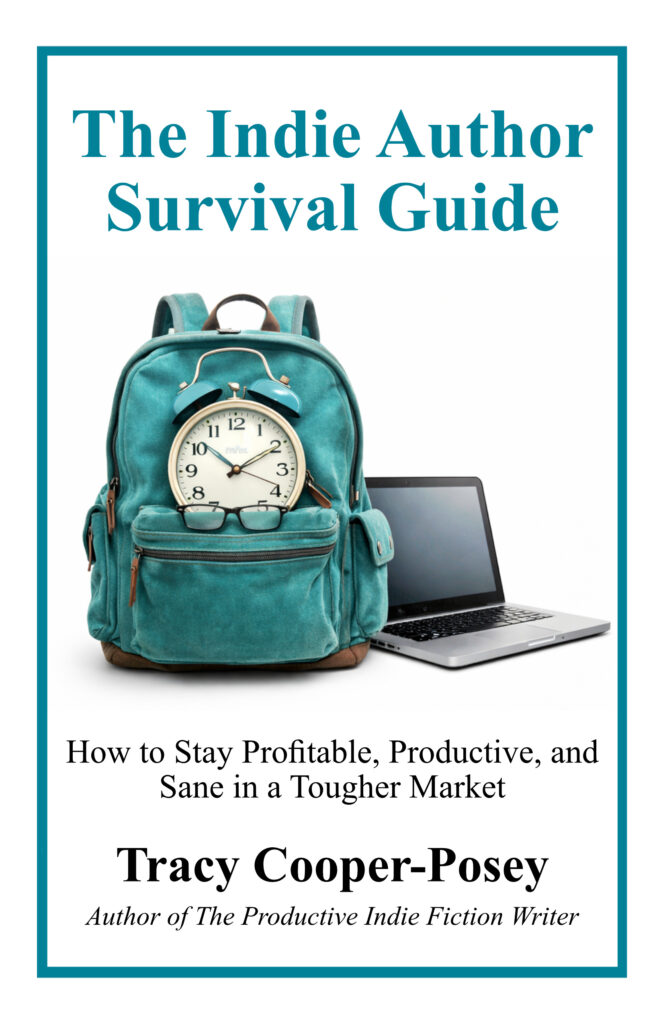
The Indie Author Survival Guide
How to Stay Profitable, Productive and Sane in a Tougher Market
Now Available.

The Productive Indie Fiction Writer: Strategies for Writing More, Earning More, and Living Well
Write More, Faster Than Ever Before | Are You Prolific?
Editing Your Next Novel? Mark Posey offers fast, writer-friendly edits with zero drama. Check out services »