
This post is part of the Solar Sail Theory series.
- The Solar Sail Theory of Indie Publishing
- Email List Size Really Does Matter
- Should You Blog? A Solar Sail Theory Answer
- Being Seen: Why Visibility Matters More Than Virality
- Direct Sales and Removing Drag
- Why Fast(er) Writers Build Bigger Sails
- The Death of the Rocket Launch Career
- People Are Part of Your Sail
- Cultivating Luck
- The Magic of Increments
- How to Expand Your Discoverable Surface Area
One of the persistent myths about writing careers is that they’re built by books. Write a good book. Publish it. Repeat often enough, and eventually success will follow.
Books are certainly essential. Without them, there is no career. But books don’t travel through the world on their own.
People carry them.
Every recommendation, every conversation, every invitation to speak, every review, every bookseller who hand-sells your novel, every newsletter subscriber who forwards your email to a friend, every journalist who mentions your work, every author who introduces you to someone else…they’re all adding tiny amounts of momentum to your career.
In the Solar Sail Theory, people are part of the sail.
Just as a solar sail gathers momentum from countless tiny photons, a writing career gathers momentum from countless human connections. One conversation won’t change your career. One reader won’t make you a bestseller. One conference won’t transform your business.
But thousands of relationships, accumulated over years, create a remarkably large sail.
Networking Isn’t a Dirty Word
The word networking makes many writers break out in hives. It conjures images of crowded hotel bars, awkward small talk, and collecting business cards from people you’d rather never see again.
Fortunately, that’s not networking. Networking is simply becoming part of your professional community. It’s remembering someone’s name. It’s asking thoughtful questions, congratulating another author on a new release, or introducing two people who would enjoy knowing each other.
It’s sending an email six months later because you remembered something they mentioned over coffee.
As writers, we often assume extroverts have the advantage when it comes to networking, and that we naturally suck at it. I don’t believe this at all.
Introverts often make exceptional networkers because they’re genuinely curious about other people. They listen. They remember details. They build deeper conversations instead of collecting shallow acquaintances.
The only downside is that afterwards they usually need to disappear into a quiet hotel room with a cup of tea and recover. 😊 That’s a perfectly acceptable price to pay.
Readers Are People, Too
Marketing advice often talks about readers as customers. I think that’s a mistake. Readers are relationships.
Some of my readers have been with me for more than a decade. One sent me Vegemite from Australia because I’d mentioned missing it. Another knitted hats for my entire family when chemotherapy took my hair and everyone else shaved their heads in solidarity.
Many of my readers have become people I genuinely enjoy hearing from.
Those friendships are rewarding in themselves, but they also change something fundamental about writing.
When I sit down to write another novel, I’m no longer imagining an anonymous market somewhere out there. I’m thinking about people I actually know. People who are waiting to visit those worlds again.
That makes writing feel much less like manufacturing a product and much more like continuing a conversation.
You Are Part of Your Brand
Many writers still think of themselves as private people who happen to write books. The moment you publish, that changes.
Whether you speak at conferences, sit behind a market table, appear on podcasts, sign books at a bookstore, or simply introduce yourself as an author at a neighbourhood barbecue, you become a public representative of your work.
People form impressions before you’ve said a single word. That’s simply how humans are wired.
It isn’t about being conventionally attractive or wearing expensive clothes. It isn’t about developing a theatrical persona or dressing in costume. It’s about intentionality.
Ask yourself what impression you’re creating. Does the way you present yourself suggest professionalism? Creativity? Confidence? Someone who takes both their readers and their work seriously?
You don’t need to wear medieval robes if you write fantasy, nor a fedora and trench coat if you write noir. Jeans and a T-shirt are perfectly acceptable. Food stains aren’t.
Neither is neglecting basic personal hygiene.
Readers remember meeting authors. If someone’s strongest memory of meeting you is that they couldn’t wait to step backwards, they’re unlikely to separate that experience from your books. Human beings don’t compartmentalize that neatly.
For generations, creative people cultivated the myth of the eccentric genius. The brilliant but impossible artist. The dishevelled novelist whose behaviour was excused because of their talent.
That myth has largely run its course.
Readers today expect authors to behave like professionals. They don’t mistake rudeness for genius, poor manners for artistic authenticity, or unreliability for creative temperament. After years of watching celebrities and public figures behave badly, most people have become less tolerant of the idea that talent excuses conduct.
Your appearance, your manners and your professionalism don’t replace good books. But they do make it easier for people to start a conversation, remember you positively, and recommend you to someone else.
And in the Solar Sail Theory, making human connections easier is always worth doing.
Weaving the Sail
Every relationship becomes another thread. Readers, booksellers, journalists, conference organisers, fellow writers, librarians, podcast hosts, market customers. The friendly vendor in the next booth.
None of them seem particularly significant on their own. Neither does a single thread in a sailcloth. But enough threads, woven together over years, create something astonishingly strong.
That’s the part most people notice. They see the finished sail. They don’t notice the thousands of tiny threads that made it possible.
Building the Rigging
There’s another kind of relationship that’s easy to overlook; the future one.
The author you chat with today may recommend you to a conference organiser three years from now. The volunteer at today’s festival may eventually become the person running it.
The journalist writing a small community story today may later become an editor at a national publication. The bookseller you met this summer may recommend your novels to hundreds of readers over the next decade.
None of those relationships produce immediate momentum. That’s because they aren’t part of today’s sail. They’re part of the rigging.
Rigging doesn’t make a ship move. It allows the ship to carry a larger sail when the wind arrives.
Every conversation you have today quietly increases the amount of momentum you’ll be able to capture in the future.
You don’t build rigging when you need it. You build it long before.
Keep Weaving
Not every person you meet will become a friend. Not every reader will write you an email. Not every conference conversation will lead to an opportunity. That’s perfectly normal.
You’re not trying to predict which relationships will matter. You’re simply adding another thread to the weave. Another line to the rigging.
Over time, almost without noticing, your sail grows larger.
Books may begin a writing career, but people sustain it. Every genuine relationship becomes another thread in the sail, another line in the rigging, another quiet increase in your capacity to catch the opportunities already drifting through your world. Like everything else in the Solar Sail Theory, it isn’t about one dramatic breakthrough. It’s about steadily enlarging your ability to capture momentum.
Now Available.

The Anti-Ensh*ttification Field Manual for Indie Authors:
Because the platforms will decay…but your career doesn’t have to go down with them.
Now Available.
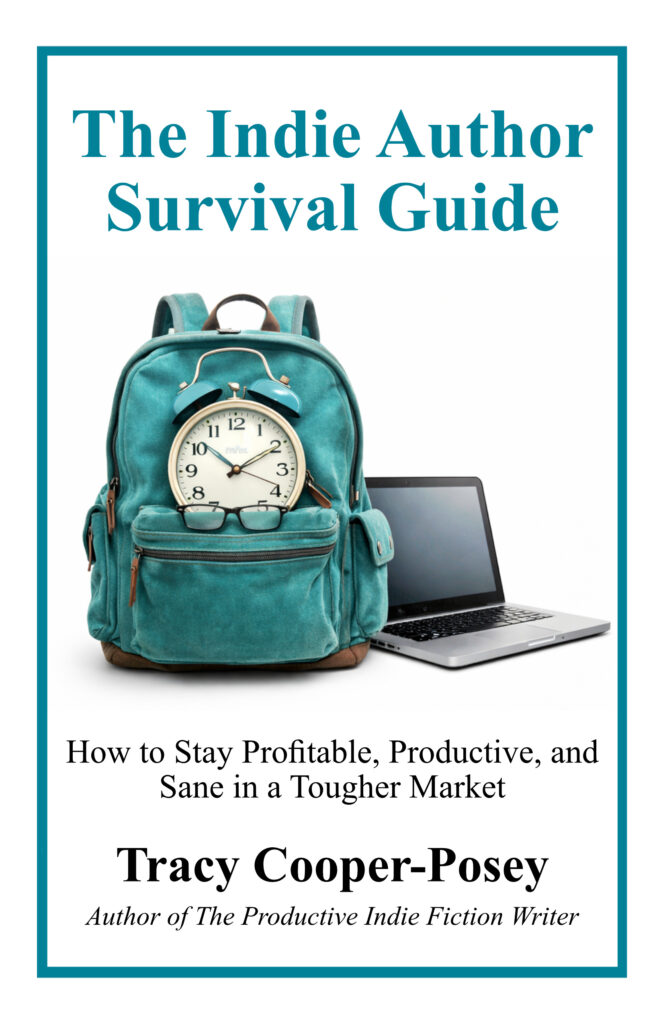
The Indie Author Survival Guide
How to Stay Profitable, Productive and Sane in a Tougher Market
Now Available.

The Productive Indie Fiction Writer: Strategies for Writing More, Earning More, and Living Well
Write More, Faster Than Ever Before | Are You Prolific?
Editing Your Next Novel? Mark Posey offers fast, writer-friendly edits with zero drama. Check out services »