
Trad, “Hybrid,” and Choosing Wisely in 2026
The Reality No One Says Out Loud
This is a series:
- Part 1: Trad vs Indie in 2026: The Brutal, Unsentimental Guide
- Part 2: Indie Publishing in 2026: Money, Control, AI, and the Business You Actually Run
- Part 3: Trad, “Hybrid,” and Choosing Wisely in 2026: The Reality No One Says Out Loud
By now you’ve seen the two worlds.
In Part 1, we walked through what traditional and indie publishing actually look like in 2026.
In Part 2, we dug into indie as a business model that can survive AI, platform decay, and the slow collapse of old discovery systems.
Now we’re going to talk about the thing nobody likes to say out loud: Most authors aren’t confused about how these systems work. They’re confused because they’re emotionally attached to what they want these systems to be.
This is where we separate strategy from nostalgia.
The Illusion of the Traditional “Career”
Traditional authors often say, “I want a career.” What they mean is that they really want:
- Recognition
- Legitimacy
- To feel like a “real author” inside an established system
What they actually get is:
- A slot in a corporate pipeline
- A contract that can vanish
- A list position that can be cut
- An editor who can leave
- A marketing plan that consists of a catalog entry
The reason this hurts so much when it falls apart is because trad authors believe they’re building a career. They’re not. They’re participating in a corporate supply chain that has no obligation to keep them in it.
And enshittification makes this worse every year. Publishers are under pressure from retailers. Retailers are under pressure from shareholders. Publishers are also under pressure from their corporate overlords, who insist upon growth and shareholder profits at any cost. The squeeze travels downhill. It always lands on the author.
You can do everything “right” and still be quietly dropped because the list needs to be trimmed. That’s not a career. That’s a vendor relationship you didn’t realize you were in.
What Traditional Contracts Really Do in 2026
Let’s talk mechanics, not dreams. Modern trad contracts commonly include:
- Rights grabs across multiple formats and territories
- No automatic reversion clause unless you fight for one
- Reversion criteria so unrealistic you’ll never trigger them
- Non-compete clauses that restrict what you can publish indie and when
- Option clauses that give the publisher first refusal on your next work
And then the silent one:
They can sell sub-rights — foreign, audio, special editions — and you may never even know it happened (ask me how I know this happens). You may not see meaningful money from those sales. You may not even be told. You are not a partner. You are an asset.
Why “Balanced Hybrid” Is Mostly a Trap
This is where we step on some toes. A lot of advice over the last decade said:
“Be hybrid! Best of both worlds!”
That was semi-true around 2014–2018. It is not true in 2026. Here’s what hybrid actually looks like now:
- Trad schedules that move like molasses
- Indie schedules that demand agility
- Non-compete clauses that choke your indie output
- Two branding strategies fighting each other
- Two marketing strategies fighting each other
- Two production timelines fighting each other
- One exhausted human trying to do both
You cannot run two careers with one nervous system. What happens in reality is simple: You underperform at both.
The Three Exceptions That Still Work
There are three situations that still make sense. They just don’t look like what people think “hybrid” means.
Exception #1 — The Lottery Ticket
Write one book. Send it to agents. Forget it exists.
- Do not pause your indie plans.
- Do not wait.
- Do not “see what happens.”
Build your indie business as if that trad book will never sell. If lightning strikes three years later? Lovely. If it doesn’t? You didn’t waste three years of your life.
That’s not hybrid. That’s probability management.
Exception #2 — Indie-First Licensing
This is not hybrid either. This is advanced indie strategy. You:
- Keep full control of your ebooks and core print rights
- License foreign rights, audio, special editions, or translation as separate deals
- Treat publishers like contractors, not employers
This is the power position. Because you’re choosing when and how to work with them. Not begging to be let in.
Exception #3 — The Rights-Reversion Lifeboat
This one happens quietly, and almost never gets talked about.
A primarily traditional author occasionally gets the rights back to an older book. Maybe the publisher lets it go. Maybe a clause finally triggers. Maybe an imprint closes and paperwork falls through the cracks. Suddenly, they have a book they legally control again.
What do they do? They self-publish it. Not because they’re “going indie.” Not because they’ve had an entrepreneurial awakening.
Not because they want to build a direct sales funnel. They do it because they don’t want the book to die.
They want it back in print. They want readers to be able to find it. They want the work to exist. This is not indie publishing as a strategy. This is rights preservation.
These authors:
- Are still primarily trad in mindset and career structure
- Are not building indie systems
- Are not treating this as a business pivot
- Are simply using self-publishing as the only tool available to keep their backlist alive
It’s the publishing equivalent of putting a book in a lifeboat and rowing it to shore yourself because the ship sailed away without it.
You’ll see many long-time trad authors with a handful of self-published titles for exactly this reason. They’re not hybrid. They’re not transitioning. They’re rescuing their own work from obscurity. And ironically, this exception highlights one of indie publishing’s greatest structural advantages: Indie books never go out of print unless the author lets them. Trad books disappear all the time.
This “rights-reversion lifeboat” case exists because the traditional system routinely allows books to vanish. Indie simply doesn’t.
The Legacy Author Problem
Authors coming out of long trad careers often try to “straddle.” They want to keep one foot in trad while building indie. This is usually a mistake.
You have to pick a major. And the healthiest mindset shift you can make is this:
A traditional publisher is not your career.
They are a vendor you occasionally hire.
Once you think of them that way, the emotional rollercoaster stops. So does the heartbreak when they behave like… a corporation.
The Brutally Honest Choosing Framework
Here’s the checklist nobody puts in conference slides:
- Do you want control or validation?
- Do you want speed or permission?
- Do you want a business or an institution?
- Do you need someone to tell you what to do?
- Can you tolerate corporate indifference?
- Do you want income driven by backlist or hope driven by launches?
- Are you willing to learn basic business literacy?
- Are you prepared for AI and platform decay?
Your answers determine your path. Not your dreams. Not your nostalgia. And not what publishing looked like in 2005.
The State of Publishing in 2026 (The No-Romance Version)
- Traditional publishing is prestige-oriented, corporate, and unstable for midlist authors
- Indie publishing is entrepreneurial, adaptable, and long-game focused
- Balanced hybrid is mostly a burnout factory
- Licensing is power
- Direct sales are insulation
- Backlist is wealth
- AI and enshittification changed the rules for everyone.
The good news? You have more control over your career than authors at any point in history.
The bad news? That control comes with responsibility. You don’t get to pretend you’re “just the writer” anymore. Not if you want to survive.
Final Thought
In 2026, choosing between trad and indie isn’t about legitimacy. It’s about choosing which system you’re willing to depend on.
One depends on corporations behaving well. One depends on you. Choose accordingly.
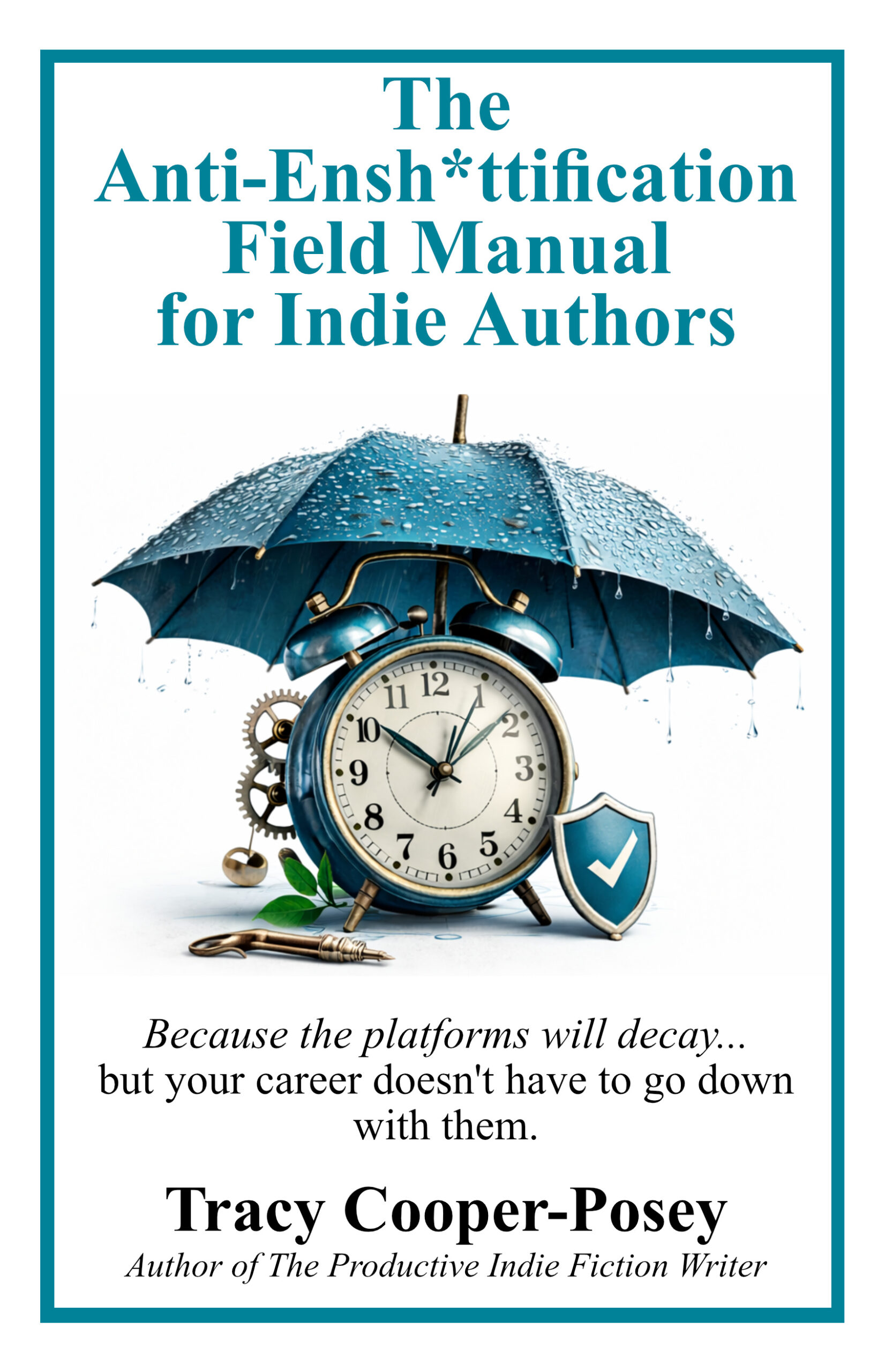 Now on pre-order: The Anti-Ensh*ttification Field Manual for Indie Authors: Because the platforms will decay…but your career doesn’t have to go down with them.
Write More, Faster Than Ever Before | Are You Prolific?
Editing Your Next Novel? Mark Posey offers fast, writer-friendly edits with zero drama. Check out services »
Pingback: Research Like An Academic, Write Like an Indie With Melissa Addey